Grendizer
1975, Go Nagai
At the age of 5 (i watched it in 90’s), I was captivated by the 70s anime Grendizer, especially its visual style and how the robots functioned. Main character would immerse themselves in the robot to control it, the robot had multifunctional arms that transformed based on the task, and it could dock into an aircraft to fly.
This fascinated me, and reflecting on these feelings today, I realize that this is when I understood that something could be modular.
Long click

Windows XP
Mac OS Leopard
Back in my 15, father gifted me first PC for my birthday, a Pentium 4, single-core, 1.6 KHz. Besides playing games and browsing the internet, I felt discomfort using the OS; it wasn't convenient for me. I needed to remove unnecessary elements and add features for comfort. I tried doing this through various tweaks, which mainly brought UX features from Mac OS that i never heard of before. This was the first time I learned about this system. Later, I realized my knowledge was insufficient for system modifications, so I conducted research to explore other market options. I tried all popular Linux distributions and liked those resembling Mac OS the most it seemed I could find what I needed in this system.
Ubuntu 5
Elementary OS
Luckily, in 2005, Apple transitioned from ARM processors to x86, allowing me to try installing this system on my computer. After three hours of tweaking kexts, I saw the animated OS boot intro, and excited by it.
I hope they add it beacuse of underhood first boot optimisation
I realized I had found what I was looking for. I don't know how I came to this, but I decided to try not releasing the left mouse button and dragging it to the desired item in the dropdown menu without letting go.
UX of mouse navigation in Mac OS
I can't describe the shock and delight I felt when the item was selected upon releasing the button. The shock was due to how right and simple this solution was for reducing clicks in such a frequently used interface operation. If you try this in Windows before and now, it won't work; you need two clicks.
UX of mouse navigation in Windows
I call this feature "long click," which continued to exist on iOS, and right now, for some objects (like app icons), you can hold the object briefly until a dropdown menu appears, then drag your finger to the desired item, and when you release, the option is selected. This feature is called 3D Touch.
Recalling my feelings, that time I realized the power of UX.
Coverflow
I'm 17 and a music lover, listening to various styles on my iPod Video and managing music library in iTunes mainly because I can set album covers. These are integral to an album, shaping the feel and impression of it. When the iPhone was released, I was amazed that I could turn the screen horizontally and navigate my library by album covers.
It was like flipping through a vinyl collection in a box, but all in my pocket.
That's when I realized how UI could significantly influence the experience of a digital tool.
El Lisitzky
In my first year at the Faculty of Graphic Design, my second university after an economics dropoff, I wasn't sure what I wanted to do in life. During one class, out of boredom, I flipped through a book on the works of the Suprematists and came across Lisitzky's illustration of his Horizontal Skyscrapers project.
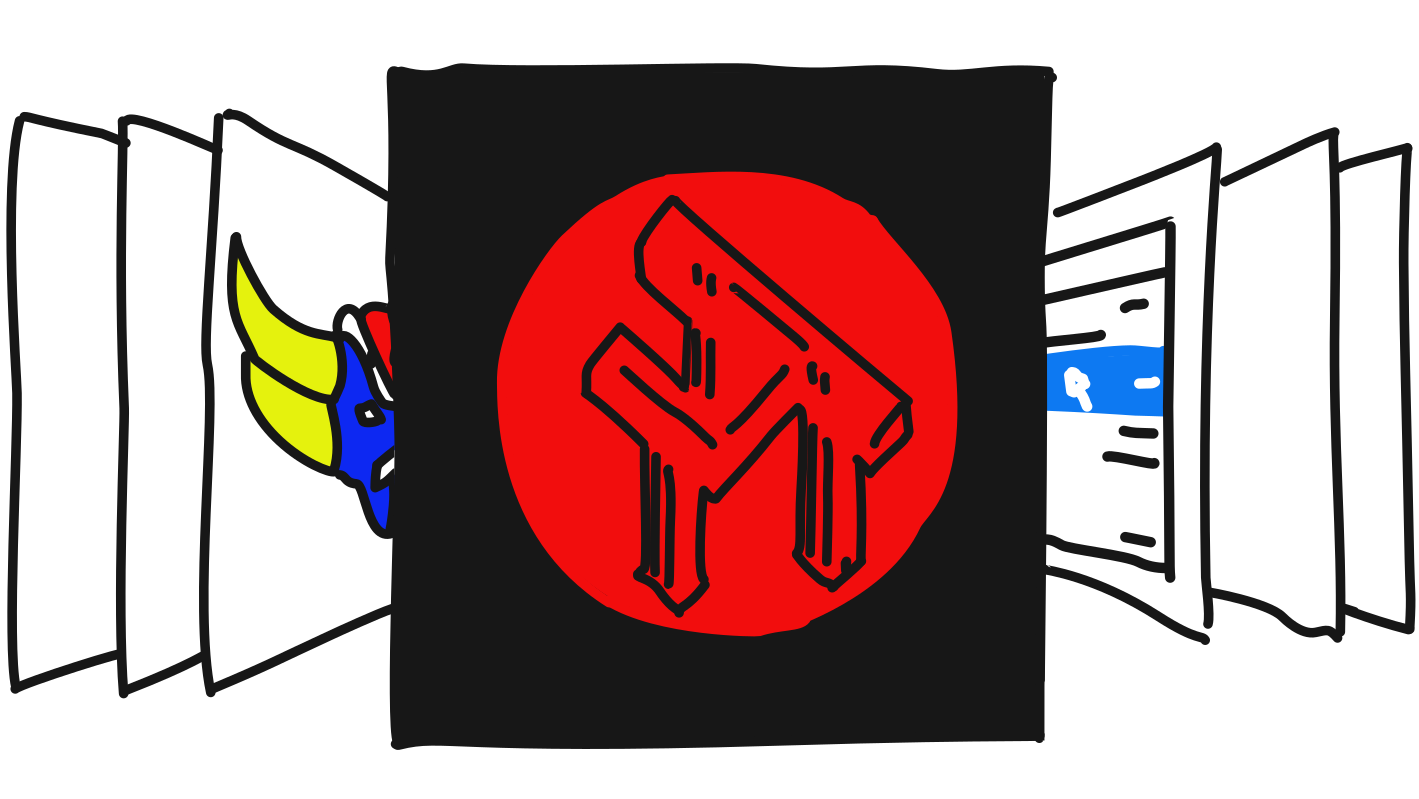
Horizontal skyscrapper, 1932, my reproduction from memory
The basic elements: black background, red circle, and building inside — struck me. I realized I wanted to amaze others with my work like this did to me.
This piece by Lissitzky shaped the style closest to me today: conveying any meaning or idea through simple forms.
If anyone see original copy of this picture, please message me. I remember it’s exuctly like at picture above but can’t find it anywhere.